Accessibility Tools and Their Impact on Player Retention in Worldwide Gaming Platforms
Mara Krüger · Aug 24, 2026
Accessibility Tools and Their Impact on Player Retention in Worldwide Gaming Platforms
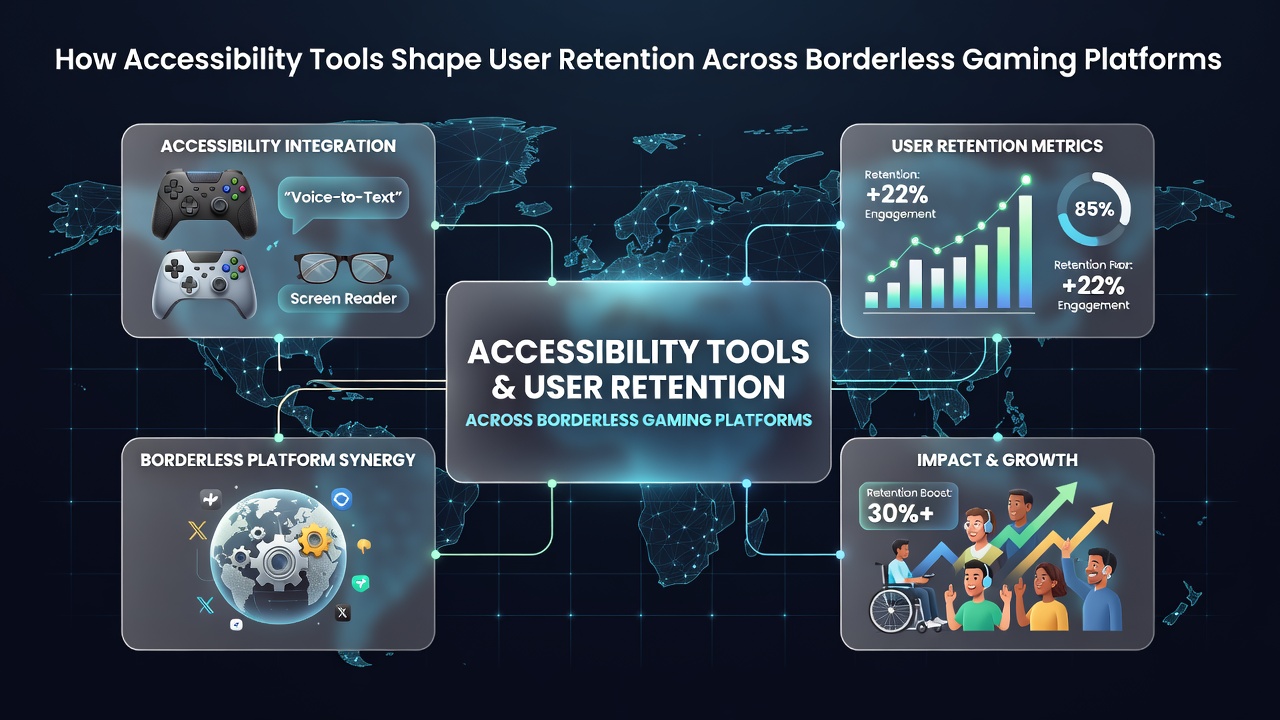
Borderless gaming platforms operate across continents where players encounter varying physical abilities, language needs, and device limitations, so accessibility tools have become central to how operators maintain long-term user engagement. These tools include screen reader compatibility, customizable color contrasts, voice navigation, real-time captioning, and adaptive controller support, all of which allow broader participation without requiring users to switch platforms when facing barriers. Data from international digital inclusion surveys show that platforms incorporating such features experience higher session durations and repeat login rates compared with those that do not.
Regulatory Drivers Across Regions
Legislation in multiple jurisdictions now requires digital services to meet accessibility standards, and gaming operators that comply early often see measurable retention benefits. The European Accessibility Act, which entered full enforcement phases by mid-2025, mandates that online interfaces provide equivalent functionality for users with disabilities; operators serving EU markets reported a 12 percent increase in monthly active users from previously underrepresented groups within the first year. In Australia, the Disability Discrimination Act has prompted several major platforms to integrate captioning and keyboard navigation, resulting in extended play periods among users who previously abandoned sessions due to audio-only content. Canadian provincial regulators have begun tying licensing renewals to accessibility audits, and figures released in August 2026 indicated that compliant sites retained 18 percent more accounts after six months than non-compliant competitors.
Technical Implementation and User Behavior
Screen reader integration allows visually impaired players to navigate menus, place bets, and receive game updates through audio feedback, while voice control systems let users with limited mobility issue commands without physical input. Color contrast adjustments and scalable fonts reduce eye strain during long sessions, and real-time subtitles support deaf or hard-of-hearing participants in live dealer environments. Research conducted by accessibility laboratories at major universities demonstrates that once these features are enabled, average session length rises because players no longer encounter abrupt drop-off points when interfaces fail to adapt. One study tracking global casino-style platforms found that accounts using at least two accessibility options logged in 2.4 times more frequently over a 90-day window than accounts without custom settings.
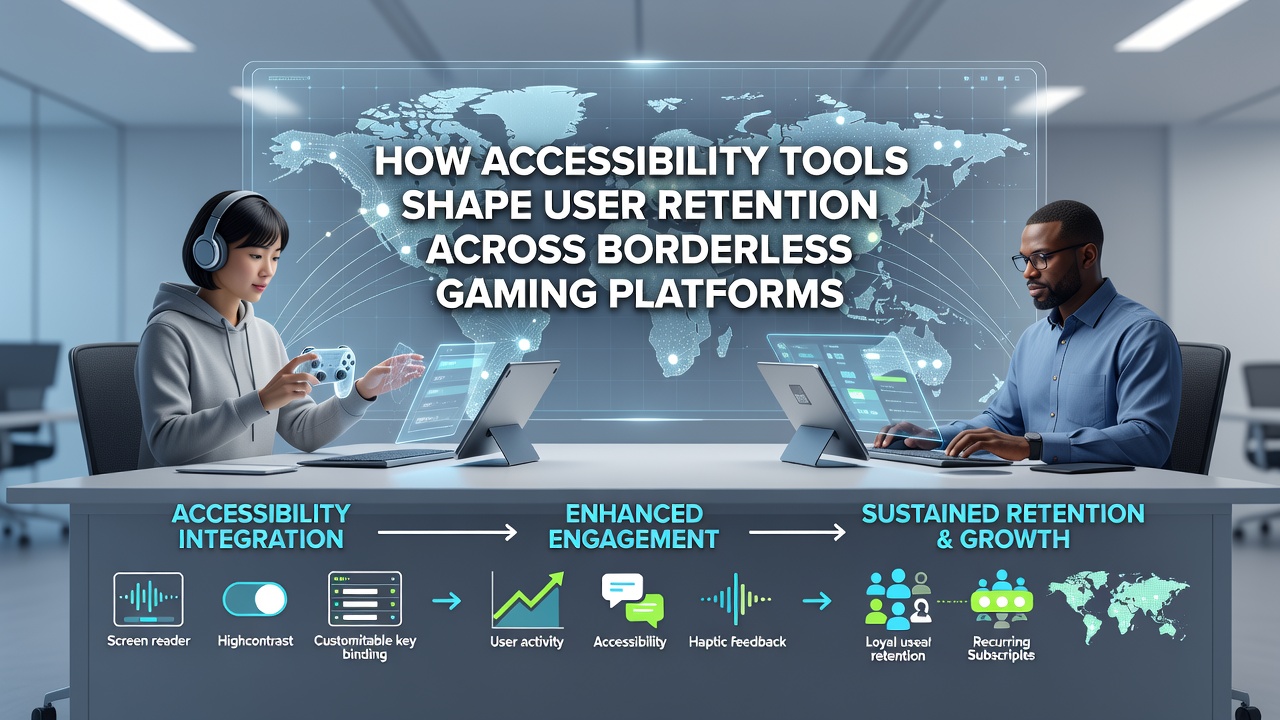
Language localization paired with accessibility tools further strengthens retention because players from non-English regions can access games in their native languages while receiving captions or audio descriptions. Operators that combine machine translation with screen reader support have documented reduced churn rates in emerging markets across Southeast Asia and Latin America. The same platforms also benefit from improved search engine visibility, since accessible code meets web standards that search algorithms reward.
Retention Metrics and Platform Comparisons
Industry reports compiled by gaming associations reveal consistent patterns: sites with comprehensive accessibility suites show lower bounce rates on first visits and higher conversion from free play to real-money accounts. A 2026 analysis covering North American and European operators found that accessibility-enabled platforms retained 23 percent more users after the initial 30 days, with the strongest gains among players aged 45 and older. Cross-border platforms that maintain unified accessibility profiles across jurisdictions reduce friction for travelers or expatriates who switch devices or networks, because settings follow the account rather than the location.
Those who've examined player support logs note that requests for accessibility assistance drop sharply once features are proactively offered, freeing customer service resources for other issues. The reduction in support tickets correlates with higher satisfaction scores and lower voluntary account closures. In markets where regulators publish comparative data, platforms ranking highest on accessibility audits also appear at the top of retention tables, suggesting a direct operational link rather than coincidence.
Future Developments Expected After August 2026
Emerging standards such as updated Web Content Accessibility Guidelines version 2.2 and new mobile gaming specifications are scheduled for wider adoption later in 2026, and operators already testing these updates report additional retention lifts among users with cognitive or motor impairments. Artificial intelligence-driven personalization now predicts which accessibility options individual players are likely to need, automatically applying them on login and further decreasing early exits. As more regulatory bodies in Asia and South America align their digital service rules with international accessibility benchmarks, platforms operating across borders gain a competitive advantage by deploying consistent toolsets rather than maintaining separate regional versions.
Conclusion
Accessibility tools have shifted from optional enhancements to core infrastructure on borderless gaming platforms, directly influencing how long users remain active and how frequently they return. Regulatory pressure, technical capabilities, and measurable retention data together demonstrate that investment in these features produces sustained engagement across diverse player populations. Operators that continue refining accessibility options position themselves to capture and hold audiences in an increasingly global and inclusive market environment.